
Machine Learning Concepts to Master in 2026
CareerViQ Team
May 4, 2026
In this article, we're going to look at some core concepts of machine learning that could be very useful to us in 2026.
In today's world, Artificial Intelligence is becoming an important part of life. To master this, we need to learn many things, such as how to write a prompt, how to handle a situation, etc. In Artificial Intelligence and Data Science, we will have to learn two concepts: Machine Learning and Deep Learning. So today in this article we will learn some such concepts of machine learning which we should learn in 2026.
What is Machine Learning?
First of all we have to know what is machine learning?
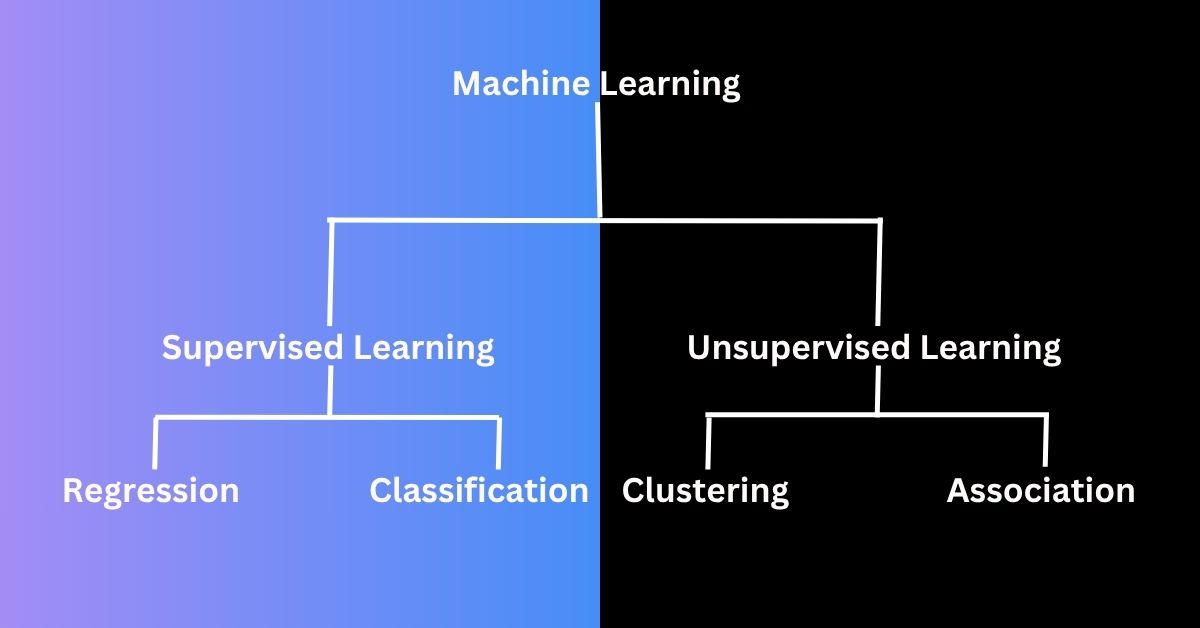
Machine learning (ML) is a subset of artificial intelligence (AI) that enables systems to learn from data, identify patterns, and make decisions or predictions without being explicitly programmed for every specific task. In Machine Learning there is a two techniques supervised learning and unsupervised learning.
Machine Learning concepts to master in 2026
1. Supervised Learning
Supervised learning is a learning based on labelled data. In short, while learning system has knowledge of a set of labelled data. The one of the most common and frequently used learning methods. Supervised learning uses classification and regression techniques to develop predictive models. Classification techniques predict categorical responses.
A. Regression
Regression algorithms are used if there is a relationship between the input variable and the output variable. It is used for the prediction of continuous variables, such as Weather forecasting, Market Trends, etc.
Regression Algorithms
- Linear Regression
- Regression Trees
- Non-Linear Regression
- Bayesian Linear Regression
- Polynomial Regression
B. Classification
Classification algorithms are used when the output variable is categorical, which means there are two classes such as Yes-No, Male-Female, True-false, etc.
Classification Algorithms
- Random Forest
- Logistic Regression
- Decision Trees
- Support vector Machines
2. Unsupervised Learning
Unsupervised learning refers to learning fron unlabeled data. It is based more on similarity and differences than on anything else. In this type o learning, all similar items are clustered together in a particular class where the label of a class is not known.
Unsupervised Learning Algorithms
- K-means clustering
- Neural Networks
- KNN (k-nearest neighbors)
- Hierarchal clustering
- Independent Component Analysis
- Anomaly detection
- Apriori algorithm
- Singular value decomposition
- Principal Component Analysis
A. Clustering
Clustering is a method of grouping the objects into clusters such that objects with most similarities remains into a group and has less or no similarities with the objects of another group.
B. Association
An association rule is an unsupervised learning method which is used for finding the relationships between variables in the large database. It determines the set of items that occurs together in the dataset. Association rule makes marketing strategy more effective.
3. Reinforcement Learning
Reinforcement Learning is a feedback-based Machine learning technique in which an agent learns to behave in an environment by performing the actions and seeing the results of actions. For each good action, the agent gets positive feedback, and for each bad action, the agent gets negative feedback or penalty.
4. Artificial Neural Network (ANN)
An Artificial Neural Network (ANN) is a computational model inspired by the human brain's structure, consisting of interconnected layers of "neurons" (input, hidden, output) that process data to identify complex patterns. It is a foundational deep learning technology that learns by adjusting weighted connections via backpropagation to minimize error.
You will have to master all the above concepts in 2026 because in the increasing competition you have to be prepared at all times. If you want us to teach you all the concepts, then subscribe to our AI and Data Science category to keep getting new updates.
